
Light to moderate rainfall in various parts of the country, including Delhi, on Tuesday brought respite from the scorching sun but heat wave claimed 16 more lives in Andhra Pradesh and three in Odisha, raising the nationwide toll to 2,357.

Several global models are predicting El Nio to appear around the second half of the year, which are the crucial rain-bearing months.

According to the Indian Council of Agricultural Research Director General Trilochan Mohapatra, the insects have attacked about 40,000 hectares of land.
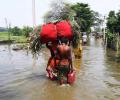
5.56 lakh people have been rescued so far from the 12 flood-affected districts. The government is plying 2,821 boats for evacuation.

Monsoon will be insufficient this year.

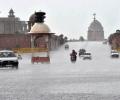
The monsoon is expected to reach Delhi around June 29, which is the normal date, but the national capital has already recorded 91mm rainfall, which is more than the normal of 55mm for June.

Eleven deaths have been reported in Saharanpur followed by 10 in Meerut, six in Agra, four in Mainpuri, three each in Muzaffarnagar and Kasganj, two each in Amroha, Bareilly, Baghpat and Bulandshahr and one each in Kanpur Dehat, Mathura, Ghaziabad, Hapur, Rae Bareli, Jalaun, Jaunpur, Pratapgarh, Banda, Firozabad, Amethi, Kanpur and Pilibhit, they said.

The prime minister also asserted that in view of the COVID-19 situation, the states must ensure that people follow all health precautions such as wearing of face masks, hand sanitisation and maintaining an adequate physical distance with each other while undertaking rescue efforts.

Deficient rains in west, flooding in north play havoc with crop cycles.

In Uttar Pradesh, southwest monsoon has been normal so far where rains and thundershowers occurred in few places since Friday.

Over 80 cattle lost their lives and over 600 houses were damaged in rain-related incidents.

Uttar Pradesh, Bihar, Jharkhand, Odisha and Gujarat, have been left out, despite a strong start to the monsoon in June

However, the estimates could change in the coming months, as full impact of excess rainfall and floods on the standing soybean and urad crops in central and western India in late August and September has not yet been fully taken into account.
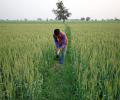
For potato farmers in the north and wheat growers in the eastern parts -- particularly in Jharkhand, Bihar, and Odisha -- the recent rains could in fact be beneficial.

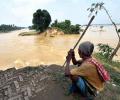
The flood situation eased in Assam and northern districts of West Bengal with water receding and no fresh deaths being reported in both the states.

The water level of major rivers, including the Ganga and the Yamuna, in Uttar Pradesh has crossed the danger mark at several places.

Light to heavy rains lashed several parts of north India intensifying cold wave conditions in the region following snowfall in higher reaches that brought down day temperature considerably in Delhi and neighbourhood.


Normally, monsoon reaches Delhi by June 27. It covers the entire country by July 8. Last year, the wind system had reached Delhi on June 25 and covered the entire country by June 29.

July and August are expected to receive 107 per cent and 104 per cent of rainfall
The IMD chief also allayed fears of occurrence of an El-Nino.

Close to half the country is experiencing deficient rains and the shortage for the figure has gone up to 16 per cent.

Several parts of north and west India reeled under scorching heat wave with the temperature touching 50 degree Celsius in Rajasthan's Churu district on Tuesday, even as the meteorological department predicted very heavy rainfall in Assam and Meghalaya till May 28.

According to an IMD forecast issued on Thursday, a heatwave spell will persist over northwest and central India during the next five days and over east India during the next three days.

While Emerald Court would take one more day to be cleaned, the work at ATS Village could extend up to seven days due to more rubble and dust on the premises, according to officials.

However, the areas under paddy - the biggest cereal grown during the kharif season - continue to be less than last year, mainly due to delayed onset of rains and also on account of shift towards the more lucrative maize.

Villages are flooded, roads have washed away and railway tracks have submerged under the rising waters.

Trade and market players have already started factoring in at least 10 million tonnes drop in production in rice in the kharif season as compared to last year due to delayed sowing.

In the Northeast, while three people died in Assam, two each lost their lives in Arunachal Pradesh and Mizoram in rain-related incidents.

DroughtThe Centre is expected to discuss issues related to drought management and also review the progress of major central schemes like soil health cards, irrigation programmes

Here's a glimpse of flood situation across north and northeast India.

The mercury at the Safdarjung Observatory is expected to breach the 43-degree mark on Thursday and touch 44 degrees Celsius by Friday, according to the India meteorological department.

In Uttar Pradesh, two persons were killed since Tuesday in the floods which have affected around 8.7 lakh people in 987 villages of 28 districts in the state.

"The season averaged maximum temperatures in Himachal Pradesh, West Rajasthan, Konkan, Goa, Coastal Karnataka, Kerala and Arunachal Pradesh are likely to be higher than normal by 0.5-1.0 degree Celsius," the Met department has said in its forecast.

The Amarnath pilgrimage resumed on Monday after remaining suspended for three days following flash floods that claimed 15 lives, while the Jammu and Kashmir administration said it would get a clear picture by Tuesday about the damage.

For the second successive year, Monsoon is likely to be below normal with parts of north-west and central India to be the most affected.

As power generation across northern and western India bore the brunt of the coal scarcity, spot prices at IEX rose to Rs 10.8 a unit during August 25-27, compared with Rs 8.7 a unit on August 22.

Agriculturally important UP, MP, Haryana, Maharashtra, and Punjab received 20-30% shortfall in rain

The UNICEF said an estimated 2.4 million children have been affected by the recent floods in the country.
